
2026-09-12 ·
Cost Factors For Rodent Control In Rockland County
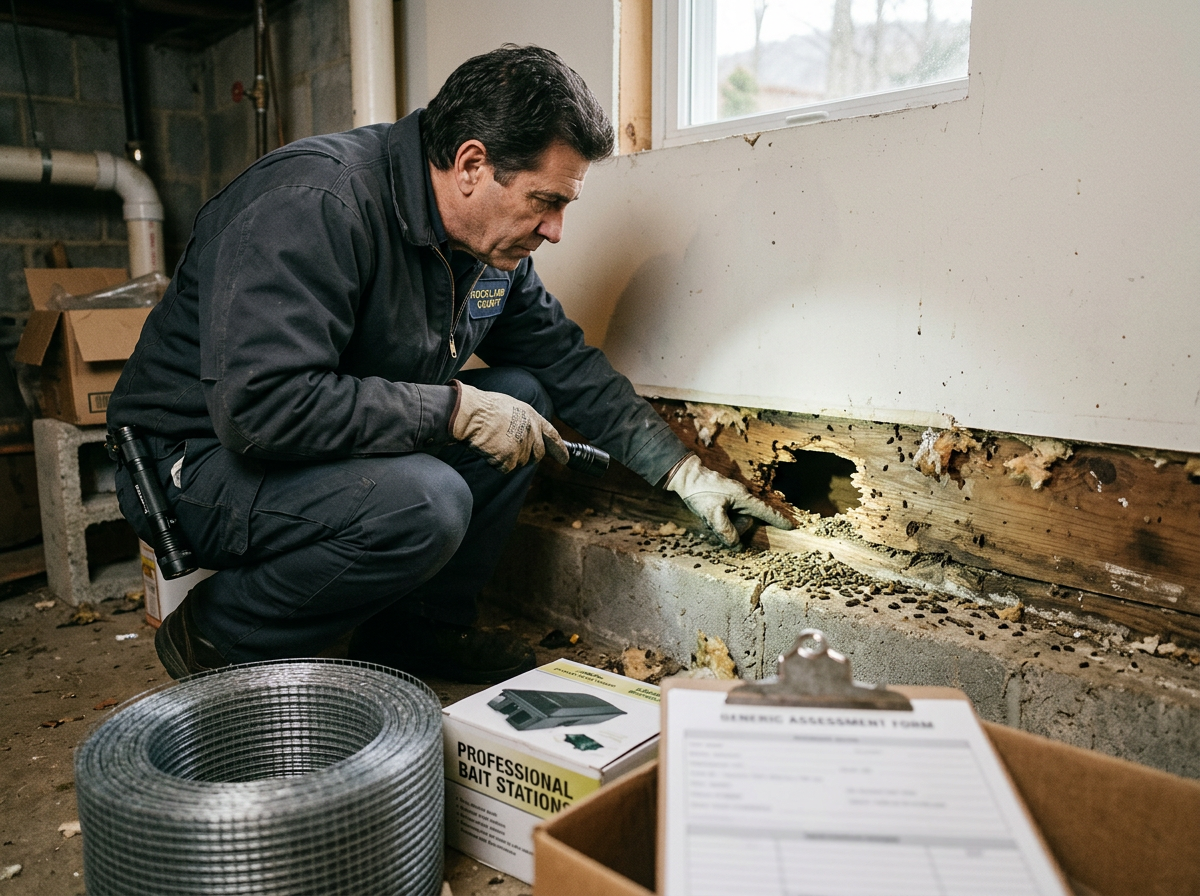
Rodent control costs in Rockland County depend primarily on the species present, the number and location of entry points, and whether insulation must be removed after droppings accumulate. Norway rats that travel through sewers and burrows near cellars often require more extensive exterior sealing than house mice living in wall voids. Roof rats that reach attics add another layer of work because droppings contaminate insulation that then needs replacement. Fieldstone and rubble foundations common in the Valley allow multiple gaps, while shared party walls downstate limit access and raise labor time.
Species Identification and Population Size
Norway rats, house mice, and roof rats each create different levels of effort. Norway rats favor sewers, cellars, and burrows, so crews must locate and seal larger exterior openings. House mice and roof rats occupy wall voids and attics, where narrow gaps of one-quarter inch let mice pass while half-inch openings admit rats. Larger litters and longer lifespans mean an established population can expand quickly once inside. Proper identification guides whether crews focus on attic work or ground-level exclusion first. Identifying Norway Rats Versus House Mice In Thiells explains the signs crews look for during inspections.
Foundation Types and Entry Point Access
Fieldstone and rubble foundations throughout Rockland County contain irregular gaps that rodents exploit. Cracked sewer laterals provide additional routes. Downstate shared party walls restrict exterior access, forcing crews to work from inside units. Each additional opening increases the time required for exclusion. Crews must inspect both visible and hidden points, then install metal or cement barriers sized to the specific rodent. Properties with multiple stories or attached garages multiply the number of potential entries and therefore the total labor.
Seasonal Migration and Snow Cover Effects
Rodents move indoors from September through November as temperatures drop. This autumn migration concentrates activity around heated buildings once snow covers the ground. Work scheduled after snow arrives often requires indoor trapping and sealing because exterior burrows become harder to reach. Earlier exclusion before the first hard freeze reduces the volume of indoor activity and the amount of contaminated insulation that must later be removed. Timing therefore affects both the scope of service and the final invoice.
Insulation Replacement and Follow-Up Work
Droppings left in attic insulation create a secondary remediation cost. Crews must remove soiled material, sanitize the space, and install new insulation to restore energy efficiency. Attic rodent removal jobs therefore combine pest work with construction tasks. Follow-up visits to confirm new activity has stopped add to the total. Homeowners who schedule an inspection through Rodent Control receive a written scope that lists each factor before any work begins. Attic Rodent Removal details the steps involved when contamination reaches living spaces.