
2026-09-12 ·
How To Check For Mice After A Thiells Storm
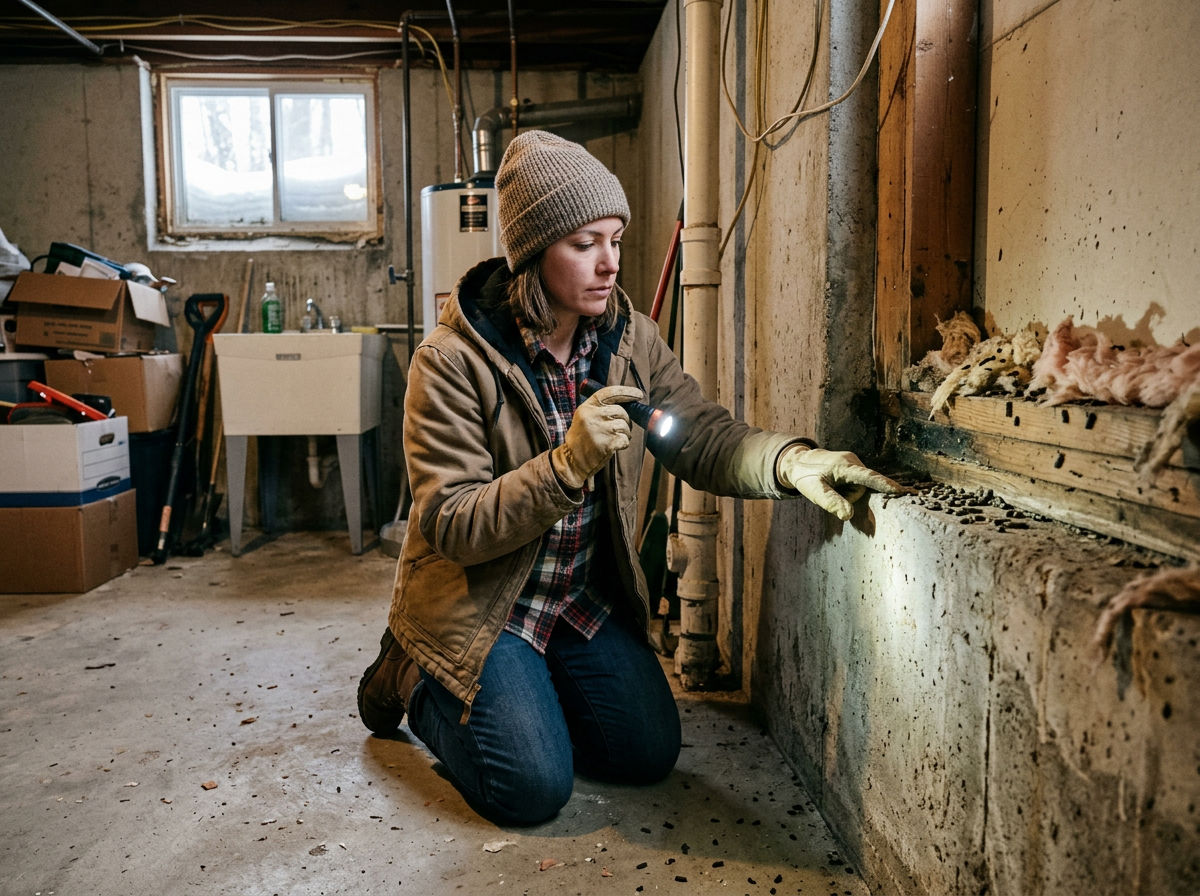
After a Thiells storm, begin by walking the exterior and scanning for openings as small as 1/4 inch that mice can pass through, especially where wind or water has loosened siding, shifted rubble foundations, or displaced vents near cellars and party walls.
Inspect Foundation and Sewer Laterals for New Gaps
Fieldstone and rubble foundations common in the Valley and Thiells areas frequently develop cracks or shifted stones after heavy rain and wind. Examine the base of the home at ground level for separations larger than a dime, paying close attention to areas where downspouts empty or where soil has washed away. Cracked sewer laterals also become accessible when storm water saturates the ground, allowing Norway rats to move from sewers into basements. Run a flashlight along the perimeter at dusk when activity peaks and note any fresh soil disturbance around burrow entrances. Shared party walls downstate can channel rodents between attached structures, so check both sides of shared lines if your property borders neighbors. These checks help identify storm-created routes before mice or rats establish indoor populations.
Search Attics and Wall Voids for Droppings and Insulation Damage
House mice and roof rats often enter attics through loosened soffits or displaced flashing after storms. Climb into the attic with a bright light and look along insulation edges for dark, rice-sized droppings or shredded material pulled into nests. Storm-driven moisture can soften insulation, making it easier for rodents to burrow and hide evidence until later. Check wall voids by removing outlet covers on exterior walls and shining a light upward to spot nesting debris. In Thiells homes with older construction, pay extra attention to areas where pipes or wires enter from the outside, as these spots widen during high winds. Finding concentrated droppings in insulation signals the need for targeted cleanup beyond simple vacuuming.
Monitor Activity Near Heated Areas During Snow Cover
Once snow blankets the ground, rodent tracks and concentrated activity appear around foundations and heated outbuildings where mice seek warmth. Place non-toxic tracking patches of flour or talc near suspected entry points and check them after 24 hours for fresh prints. Autumn migration from September to November accelerates after storms, so repeat checks weekly through early winter. Snow cover funnels Norway rats toward cellars and burrows near heated buildings, increasing pressure on any newly opened gaps. Note any new chew marks on stored items or wires in garages and sheds that sit close to the main structure.
Review Interior Signs in Kitchens and Storage Areas
Inside the home, examine behind appliances and in pantry corners for grease marks along baseboards or small holes in cardboard packaging. Mice leave a distinct ammonia odor in enclosed spaces after heavy use, especially in wall voids that connect to storm-damaged exteriors. Set a few non-poison monitoring blocks in corners and check them daily for the first week post-storm. These steps reveal whether rodents have already moved indoors through openings created by fallen limbs or saturated soil.
For ongoing issues after initial checks, review rodent control options or mice removal details. See also identifying Norway rats versus house mice in Thiells and preparing your Thiells property for spring rodent activity for continued guidance.