
2026-09-12 ·
Identifying Norway Rats Versus House Mice In Thiells
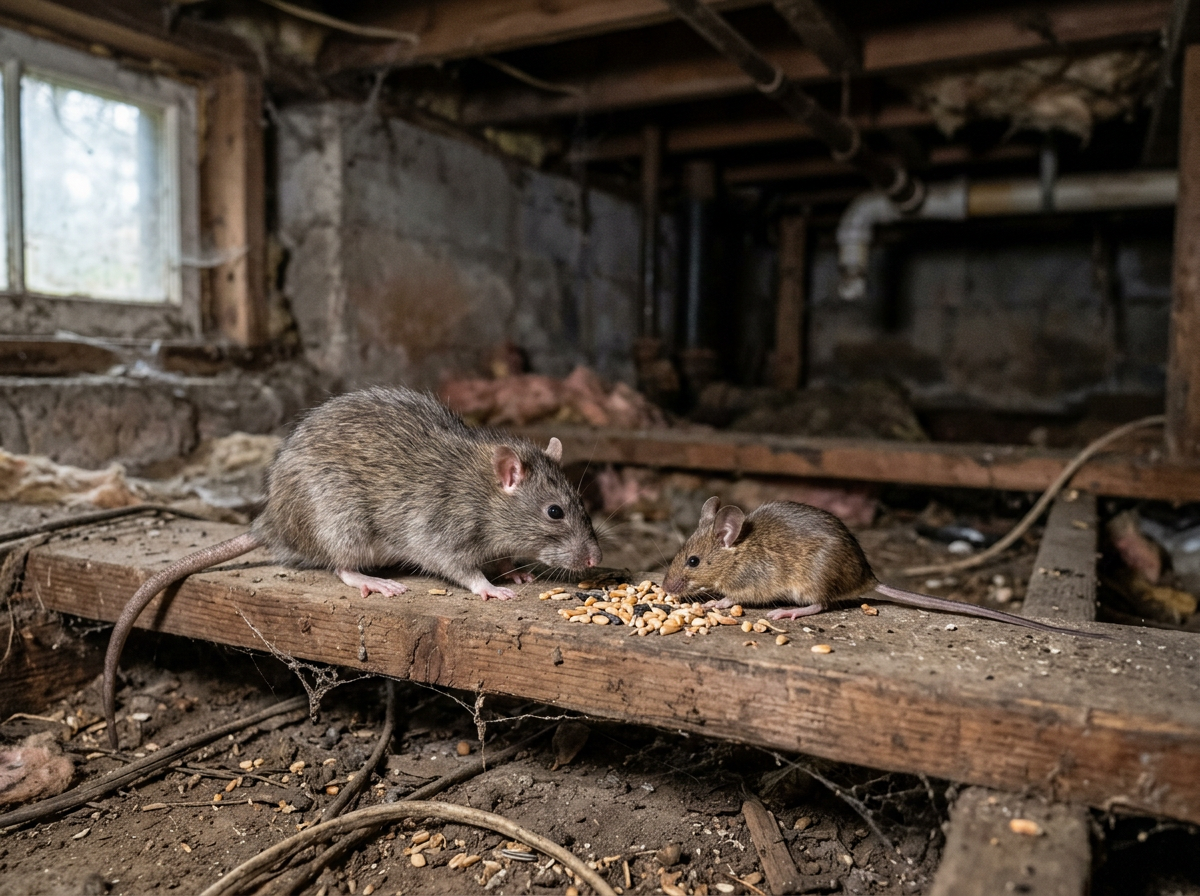
Norway rats measure 16-20 inches nose to tail while house mice reach only 6-8 inches, so a quick sighting of an adult specimen immediately reveals which species is present in a Thiells property.
Physical Characteristics
Norway rats display thick bodies, blunt noses, and small ears relative to head size, with tails shorter than their bodies. Their fur appears brownish-gray on the back and lighter underneath. House mice show slender bodies, pointed noses, large ears, and tails equal to or longer than their bodies, with uniform gray-brown coloring. These differences remain visible even in low light when residents inspect basements or attics near fieldstone foundations common in the area.
Norway rats weigh 7-18 ounces compared with house mice at 0.5-1 ounce, so tracks left in dust or snow also separate the two species by print size. Both species produce droppings, yet Norway rat droppings measure 3/4 inch with blunt ends while house mouse droppings stay under 1/4 inch and taper at both ends. Residents checking insulation or stored items can use these measurements for confirmation without trapping.
Preferred Locations in Thiells
Norway rats favor cellars, burrows along building perimeters, and cracked sewer laterals that connect to municipal lines. They exploit rubble foundations typical of older Valley homes and remain active under snow cover by staying close to heated structures. House mice occupy wall voids, attics, and spaces behind appliances, entering through gaps as small as 1/4 inch around pipes or doors. Shared party walls in denser Thiells neighborhoods allow mice to move between units while rats stay lower and require larger openings of at least 1/2 inch.
Autumn migration from September to November drives both rodents indoors as temperatures drop, yet rats concentrate near ground-level food sources while mice climb to upper levels. Droppings mixed into attic insulation signal house mouse activity and create added removal costs when the material must be replaced.
Activity Patterns and Signs
Norway rats produce gnaw marks on baseboards and pipes with 1/8-inch wide grooves and leave rub marks along walls from their oily fur. House mice create finer 1/16-inch gnaw marks and scatter smaller droppings more widely across surfaces. Both species breed year-round indoors, but Norway rats produce litters of 8-12 pups with a lifespan up to 12 months while house mice average 5-6 pups per litter and live 9-12 months.
Fresh droppings, smudge marks, and sounds of movement at night provide the clearest local evidence. Homeowners can compare these signs against known entry points described in Common Rodent Entry Points In Older Thiells Houses to narrow down the species before contacting rodent control services.
Next Steps After Identification
Once the species is confirmed, targeted exclusion work addresses the specific habits of each rodent. Properties with Norway rat signs benefit from sewer lateral inspections and ground-level sealing, while house mouse issues require attention to attic insulation and small void access points. Scheduling follows local seasonal patterns outlined in When To Schedule Rodent Control In Thiells.